The Ritz-Carlton Maldives, Fari Islands, Celebrates a Stellar Year of Green Initiatives
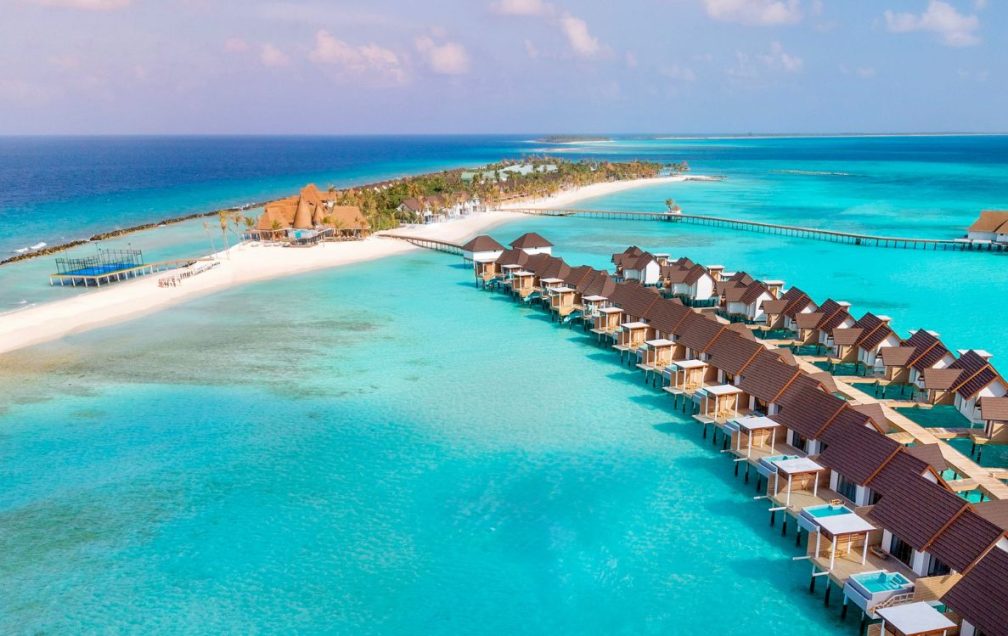
Forming part of the innovative Fari Islands’ lifestyle concept, The Ritz-Carlton Maldives, Fari Islands, anchored in sustainable architecture and design, has embedded sustainability into its operations since opening in 2021. Committed to reducing its environmental footprint, the resort reflects on a year of achievements and shares its goals for 2026.
Environment & Conservation
A destination that has quickly become an iconic addition to the Indian Ocean is also home to a hub of innovation when it comes to environmental conservation and education. This year, under the stewardship of the naturalist team, the resort launched new and enhanced projects engaged by over 1,000 guests. These included: a new coral adoption program establishing a newly opened coral sanctuary, a coral nursery snorkelling program for teenagers, and ‘Ocean Discovery through VR’ – a virtual reality underwater experience to give each guest the opportunity to explore and learn about reef life from a new perspective. Educational programming for little ones was enhanced, with its ‘Little Conservationists’ adding fish cameras and hydrophones to the experience, enabling them to capture underwater sounds and the hidden voices of the reef, and the ‘Eco Heroes’ activity was elevated with new ocean experiments , allowing young ocean explorers to better understand currents, salinity, and ocean acidification through hands-on science.
‘Eye in the Sky’ Ocean Plastics Detection and Research
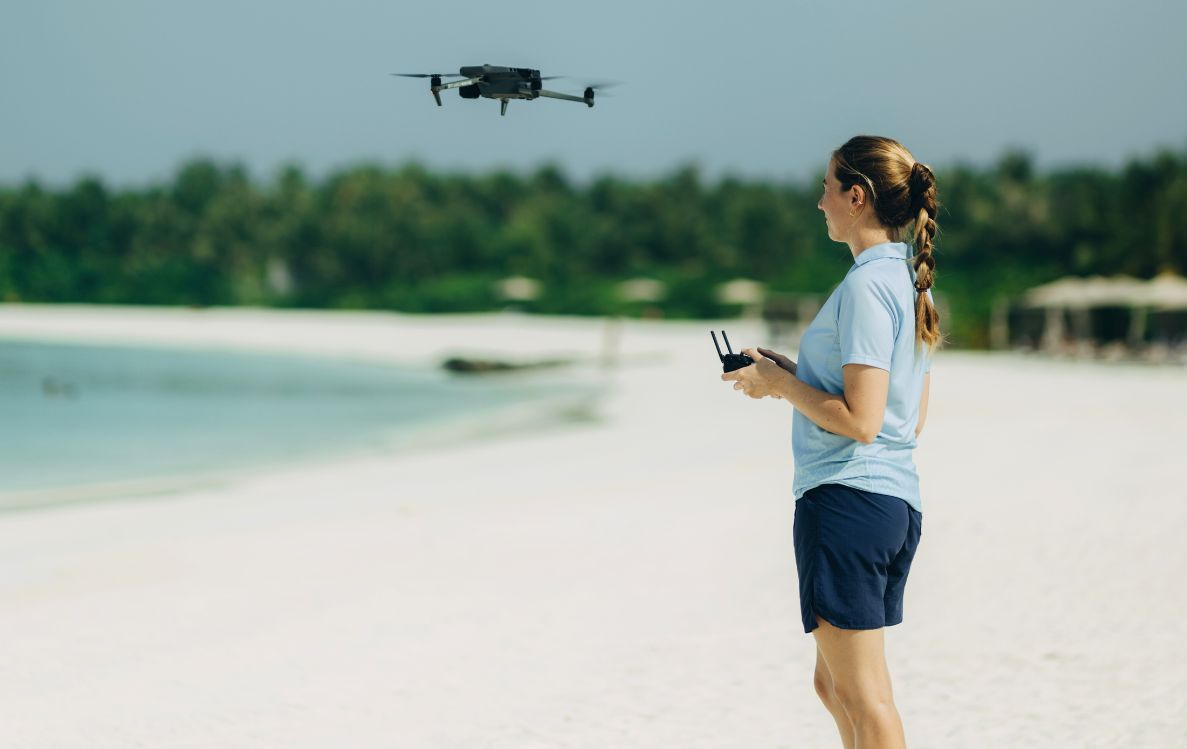
Spearheaded by resort naturalists and a progressive research community, The Ritz-Carlton Maldives, Fari Islands was the first resort in the Maldives to launch a UAV-based plastics detection initiative. The sophisticated ocean plastics monitoring program, originally launched by Dr Melissa Duncan-Schiele, identifies where ocean plastics accumulate and how they move with wind and currents. The project aims to create a nationally replicable methodology to support collective plastic monitoring across the Maldives.
Since opening, the property has achieved 902 drone flights. Surveys are ongoing with plans to share research findings in 2026.
In 2025, the resort recorded over 21 hours of flying time with 84 drone surveys. Over 1,840 kilograms of ghost nets (abandoned fishing nets) have been removed to date, with 450 kilograms removed this year.
Marine Life Monitoring
Not only used for detecting marine debris, but the drone research also documents informative wildlife sightings, patterns and behaviours. Over 17 different species were observed in 2025, including a blue whale, a pod of orcas, an ornate eagle ray, a guitarfish and blacktip reef sharks.
Partnering with the Olive Ridley Project (ORP), the resort contributes data on sea turtle sightings and ghost gear encounters. This data assists in understanding turtle movement, habitat use, and threats. In 2025, 15 turtle sightings were submitted to the national database, with ghost net reports supporting ORP’s efforts to reduce entanglement hazards. In 2025, the teams were able to locate and successfully rescue six sea turtles found entangled in abandoned nets.
Coral Regeneration
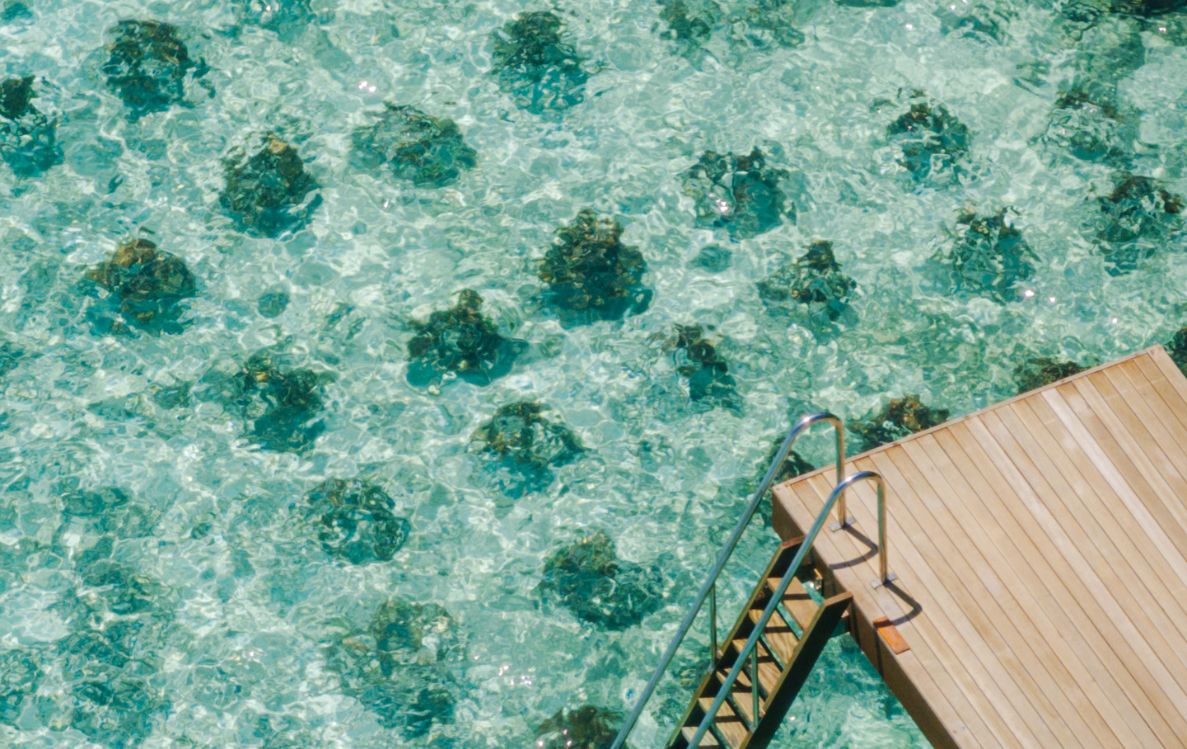
The resort’s coral regeneration project restores degraded reef areas using coral fragments. These are attached to specially designed rebar frames that provide stable structures for growth. In 2025, the project planted 140 frames, bringing the total number of coral frames planted to 243. In 2025, 2,532 fragments of coral were planted, with 290 guests participating in the coral regeneration activity. A nursery trial was also launched to grow corals ready to be planted directly onto the house reef to expand restoration efforts. As a result, 25 healthy colonies of Acropora were planted directly onto the reef. A new coral sanctuary was also opened this year, providing the opportunity for guests to visit the nursery via a swimming jetty.
Sustainable Practices
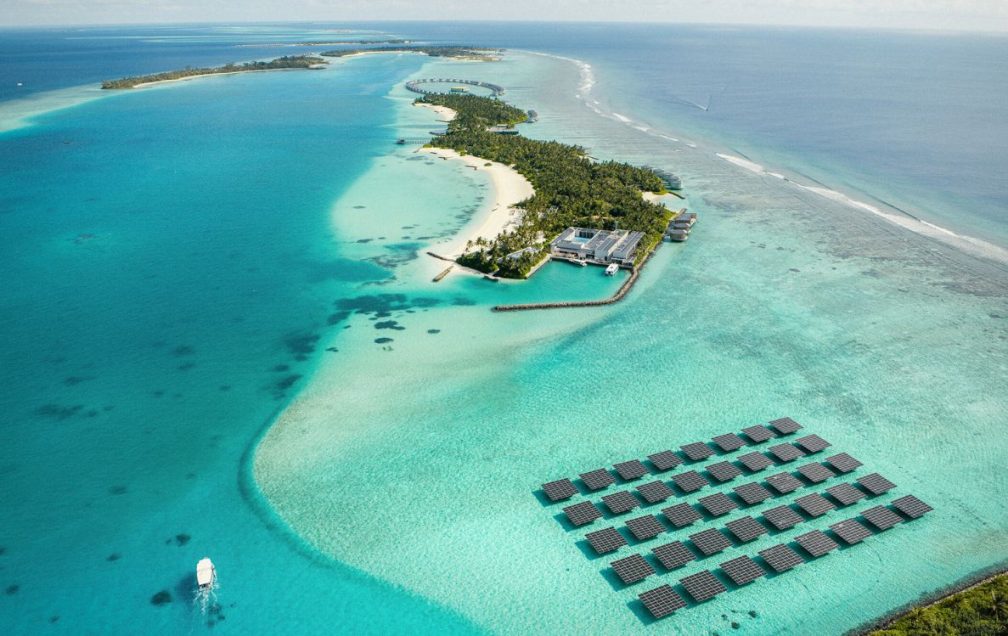
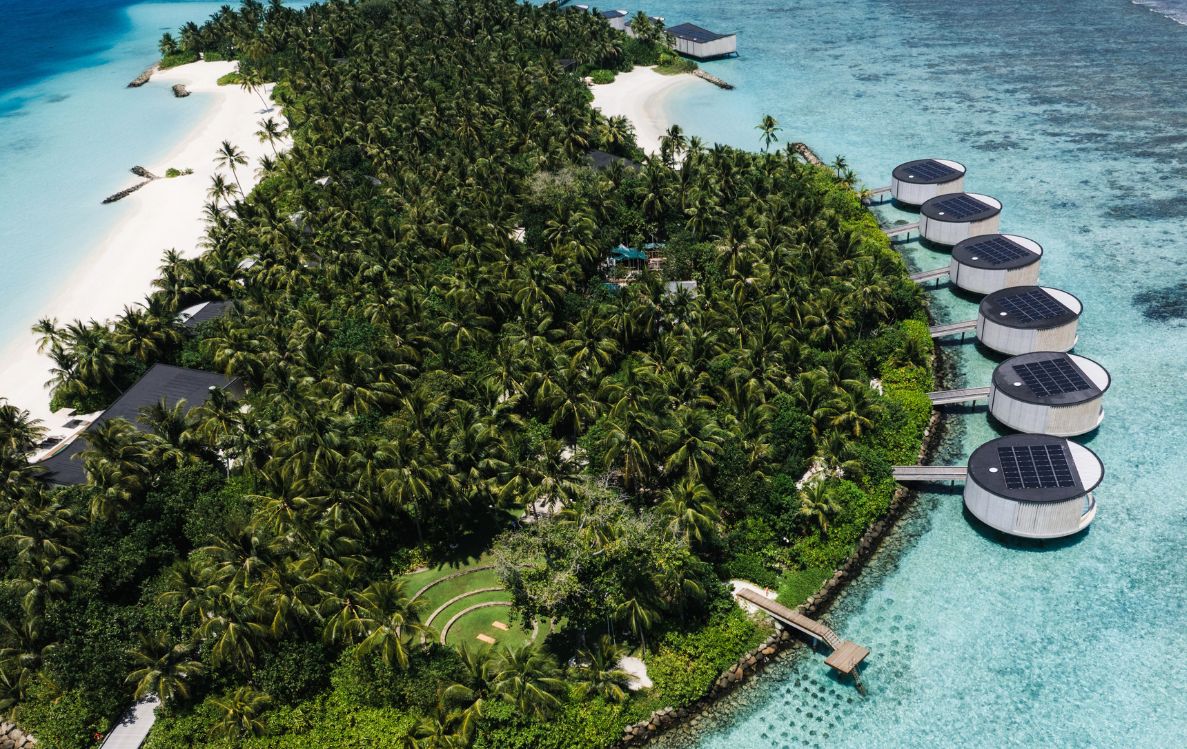
In 2025, the resort successfully reduced its energy consumption and waste, increasing operational efficiency with new initiatives property-wide. This year, with the addition of the resort’s solar garden and an expanded rooftop solar panel network, a threefold increase brought the total solar capacity at Fari Islands to 6.4 MWp, with the potential to supply up to 50 percent of the islands’ energy demand.
The resort deepened its commitment to eliminating single-use waste by replacing coffee pods with ground-coffee machines and launching a series of food-waste reduction initiatives. These included repurposing fruit peels from detox water and introducing coffee-scrub workshops for the Ladies and Gentlemen of the resort. The spa also transitioned to fully digital guest intake forms, significantly cutting paper consumption. In addition, housekeeping implemented textile-waste reduction measures and expanded community-support efforts through its slipper-donation program.
New landscape systems, including motion sensors, photocells, and sensor taps, successfully decreased energy and water consumption, with a bio-digester introduced for efficient wet waste processing, while regular cleaning and planting efforts were carried out on local islands with plant and compost donations growing community engagement.
Community Footprints
As part of its Community Footprints’ program, and with a focus on environmental awareness for the planet’s future generations, the resort’s relationships with local schools enable visits with its naturalist teams to share research and educate. Highlights in 2025 spanned – recycling competitions to encourage students to create sculptures from waste, plastic pollution awareness presentations to introduce local children to the drone research project, and mangrove planting activities to showcase the importance of coastal ecosystems in supporting biodiversity.
Closer to home the resort was proud to engage its Ladies and Gentlemen in 12 global environmental dates, where educational and inspired activities worked to raise awareness surrounding key calendar dates including; Plastic Free Day, Earth Day, Shark Awareness Day and Ocean Clean Up Day. 13 clean up events included beach and underwater reef cleaning, and waste management training sessions on segregating waste implemented.
Looking Ahead To 2026
With a considered approach to luxury living, maintaining plasticarian credentials in and around the resort is key, and the property is working to reduce single-use plastics by 80% next year. Guests can already expect reusable glass water bottles, bamboo-based personal consumables, refillable jars of amenities, and bamboo and stainless-steel straws. Bamford amenities, aligned with a philosophy of conscious, nature-led living, are replenished on-site, while the resort’s desalination plant reduces the plastic imported into the country. Achieving a 5% year-on-year reduction in water consumption is also on the horizon, together with optimising its composting program for daily food waste, with a target to increase production by 20%.
The resort looks to build on its 2025 successes into 2026, continuing to elevate the guest experience with thoughtfully designed sustainable experiences, including its signature Masters of Crafts and Visiting Hero program. Both 2026 line-ups will be announced in due course.
Meyyafushi Maldives officially opens “A Place to Connect Within & Beyond,” offering wellness, nature immersion and meaningful experiences in a serene island setting.