

Maldives Destination Guide
Twenty-six atolls, 1,192 islands and more than 2,500 years of Indian Ocean history — an overview of the Maldives, its geography, history and culture.
History
The history of the Maldives stretches back more than 2,500 years, with its location along Indian Ocean trade routes bringing centuries of interaction with the Indian subcontinent, Sri Lanka, Arabia and East Africa. Buddhism was an important part of Maldivian society before the country adopted Islam, although much of its early history remains known through archaeological evidence and historical accounts.
In 1153 CE, the Maldives adopted Islam, beginning an important new chapter in its history. The islands became an Islamic sultanate, with Malé developing as the political and commercial heart of the country. Their role in Indian Ocean trade also brought prominence to cowrie shells, which were valued as currency across Asia and Africa.
The Maldives later encountered European powers, most notably during the Portuguese occupation from 1558 to 1573. Dutch influence followed through Ceylon, before the Maldives became a British protectorate in 1887. Despite external influence, the country retained its own sultanate and internal administration. Independence came on 26 July 1965, followed by the establishment of the republic in 1968.
The country entered a new phase in 1972, when Kurumba Village, the first Maldivian resort, opened. This marked the beginning of the modern tourism industry, which went on to become a major part of the Maldivian economy.
Geography
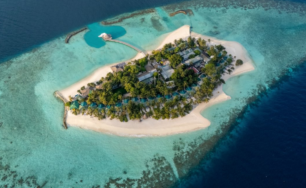
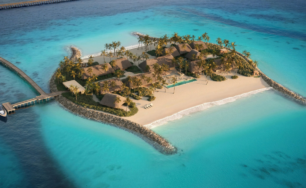
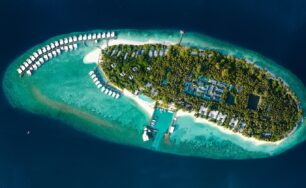
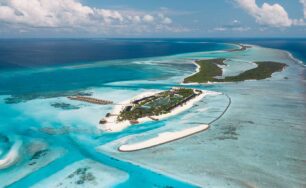
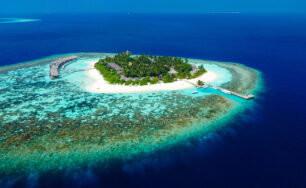
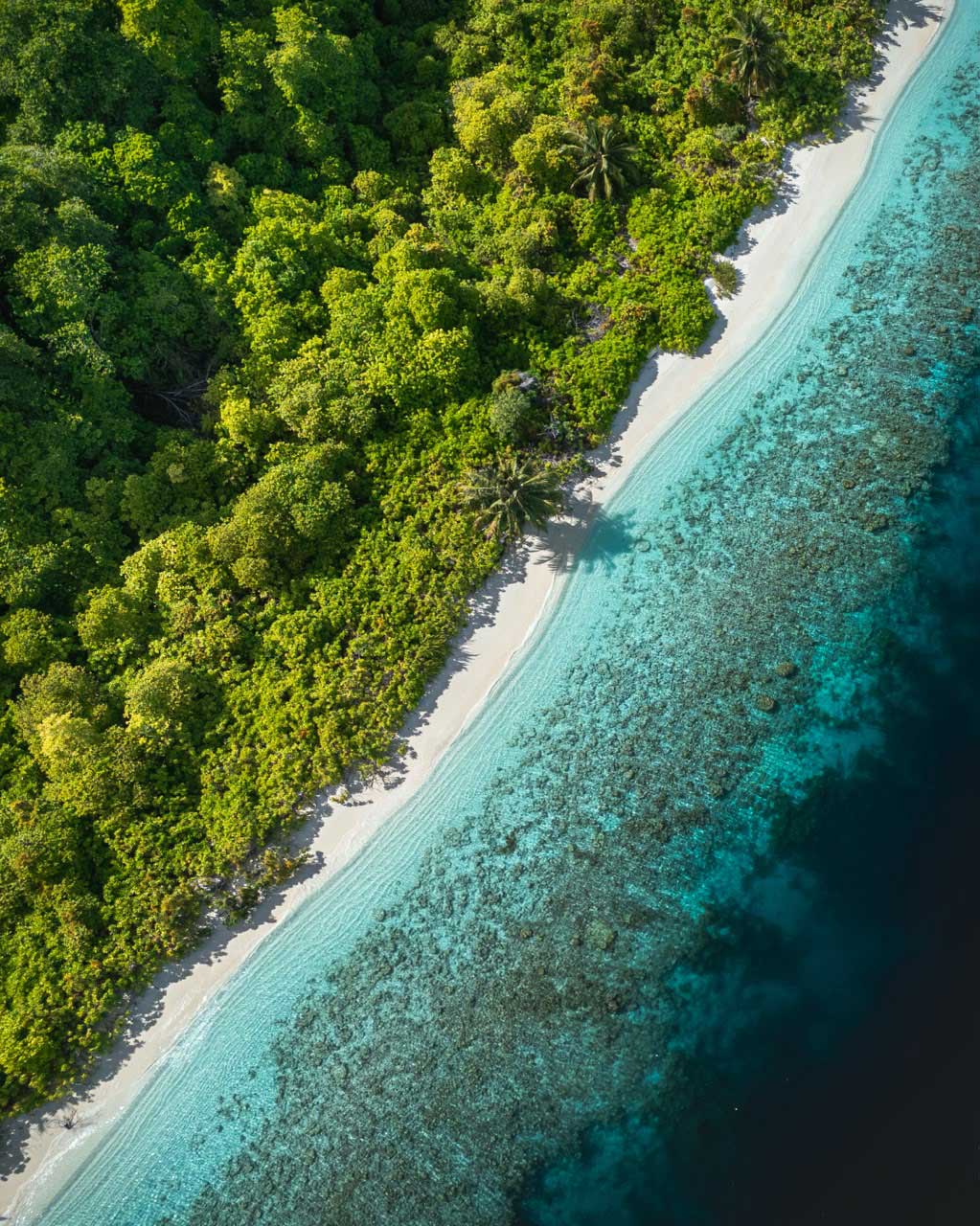
The Maldives lies in two rows of atolls in the Indian Ocean, across the equator. The archipelago is made up of 1,192 coral islands formed around 26 natural ring-like atolls, spread over approximately 90,000 square kilometres. These atoll structures sit on a submarine ridge rising from the ocean floor.
The Maldives consists of coral reefs, lagoons, sandbanks and low-lying islands spread across the atoll chain. Around 200 islands are inhabited, while others are developed as tourist resorts, remain uninhabited, or are used for agriculture and other livelihood purposes. Malé, the capital city, lies north of the centre of the atoll chain and has a population of about 230,000 people.
The nearest neighbors to the Maldives are India, 600km distant to the north, and Sri Lanka, 670km to the east.
Climate & weather
The Maldives enjoys a warm, humid tropical climate throughout the year, with temperatures generally ranging between 25°C and 32°C. The country experiences two main monsoon seasons. The Northeast Monsoon (Iruvai), from January to March, generally brings drier weather, lower rainfall and calmer conditions. The Southwest Monsoon (Hulhangu), from mid-May to November, brings more frequent rainfall, stronger winds and more variable weather. April and December are transitional months between the two seasons.
The January to March period generally offers the most consistent dry and sunny weather and is considered the peak travel season. During the Southwest Monsoon, rainfall can be heavier and more frequent, although sunny periods often occur between showers. March to May is generally the warmest period, with temperatures remaining warm throughout the year.
Drier weather, lower rainfall and calmer conditions — the most consistent dry, sunny spell and the peak travel season.
More frequent rainfall, stronger winds and more variable weather, though sunny periods often open up between showers.
Culture & traditions
Maldivian culture has evolved through centuries of interaction across the Indian Ocean and is shaped by the country’s island environment, seafaring traditions and Islamic heritage. Influences from South Asia, Arabia and East Africa can be seen in its music, dance, craftsmanship, food and celebrations. Bodu Beru is a widely recognised form of Maldivian music and dance featuring large drums, singing and group performances that typically build from slower rhythms to a faster finale.
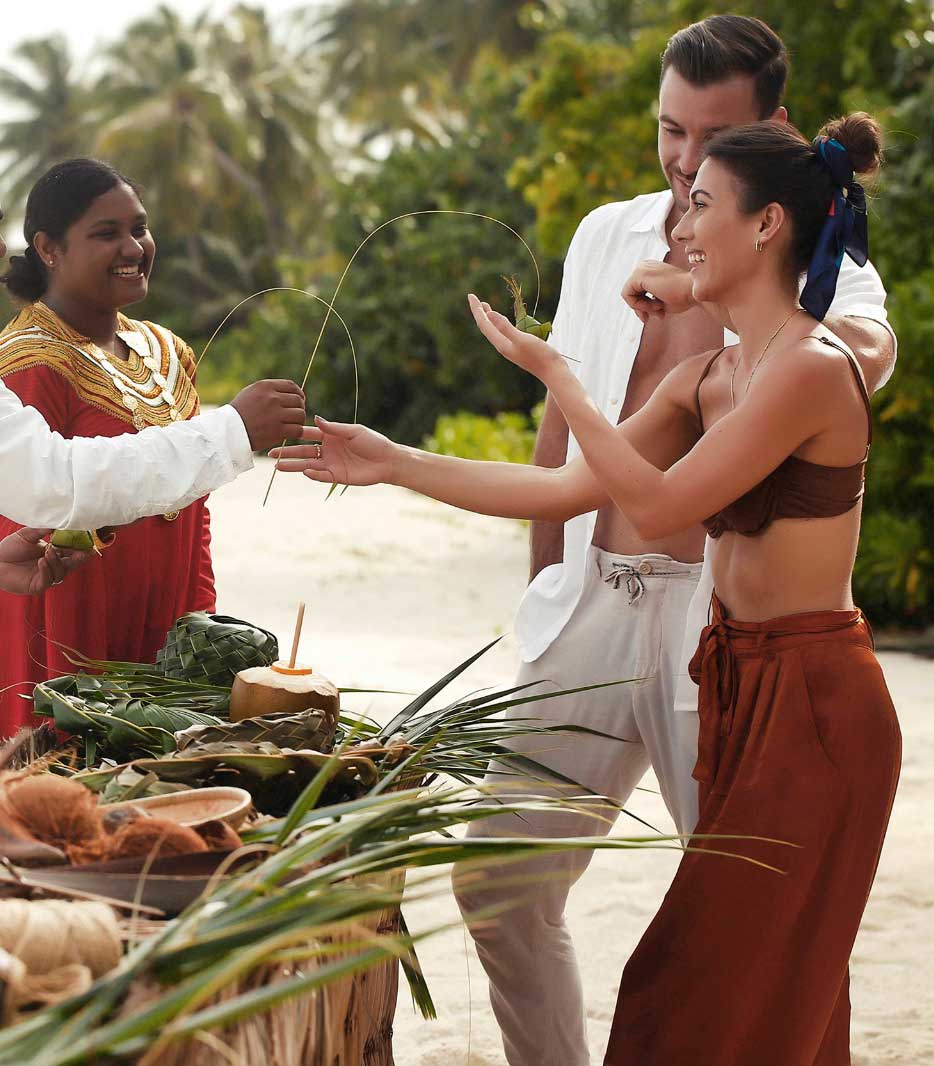
Traditional craftsmanship remains an important part of Maldivian heritage. Artisans have historically worked with materials such as wood, coconut, reeds and coir, producing lacquerware, woven mats, wood carvings and traditional boats. Lacquer work, known in Dhivehi as laa, has a long history and is particularly associated with decorative wooden objects. Traditional clothing includes garments such as the Dhivehi Libaas, a formal women’s dress often decorated with intricate hand embroidery, while traditional men’s clothing has historically included the mundu and other forms of island dress. Today, everyday clothing is generally modern, but traditional garments remain important for weddings, cultural performances and other special occasions.
Islam is the religion of the Maldives, influencing many aspects of cultural and community life. Ramadan and Eid al-Fitr are important occasions throughout the country, marked by religious observance, family gatherings and community celebrations.
People & language
Dhivehi is the national language of the Maldives and is spoken across the country, with variations found between different islands and atolls. The language reflects the Maldives’ long history and cultural connections across the Indian Ocean. English is also widely spoken, particularly within the tourism, business and education sectors.
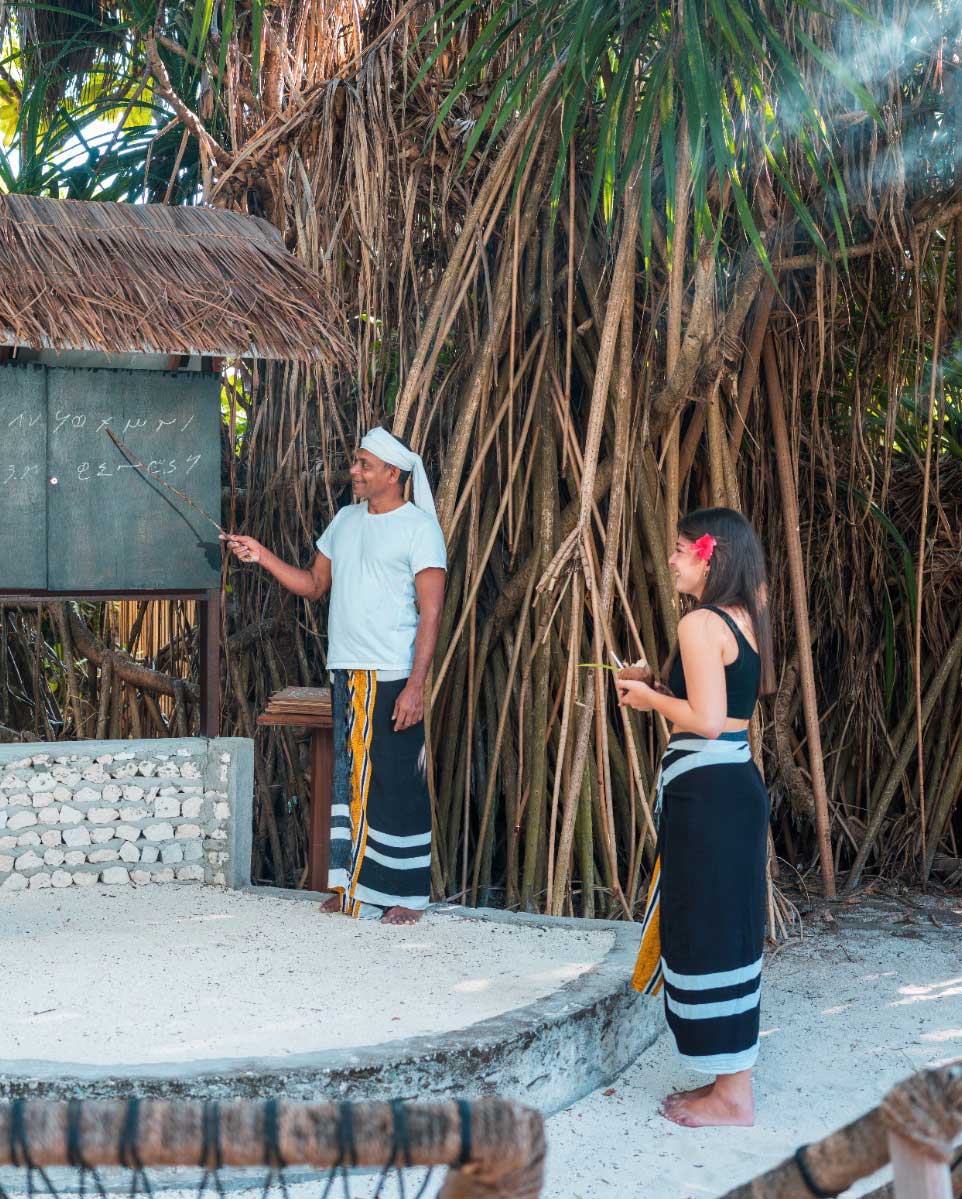
Dhivehi is written in Thaana, a Maldivian script written from right to left. Thaana developed after the Maldives adopted Islam and gradually replaced the older Dhives Akuru script, incorporating influences from Arabic and local writing traditions. It can be found alongside English on signs, menus, shopfronts and public information. Common expressions include those listed below.
A note on local customs
Islam is the state religion of the Maldives and is closely connected to the country’s cultural and social life. Visitors exploring inhabited islands, including Malé, are expected to respect local customs, including modest dress and appropriate behaviour. Resorts offer a more international atmosphere for visitors, while local laws and customs apply across the Maldives.
Food & cuisine
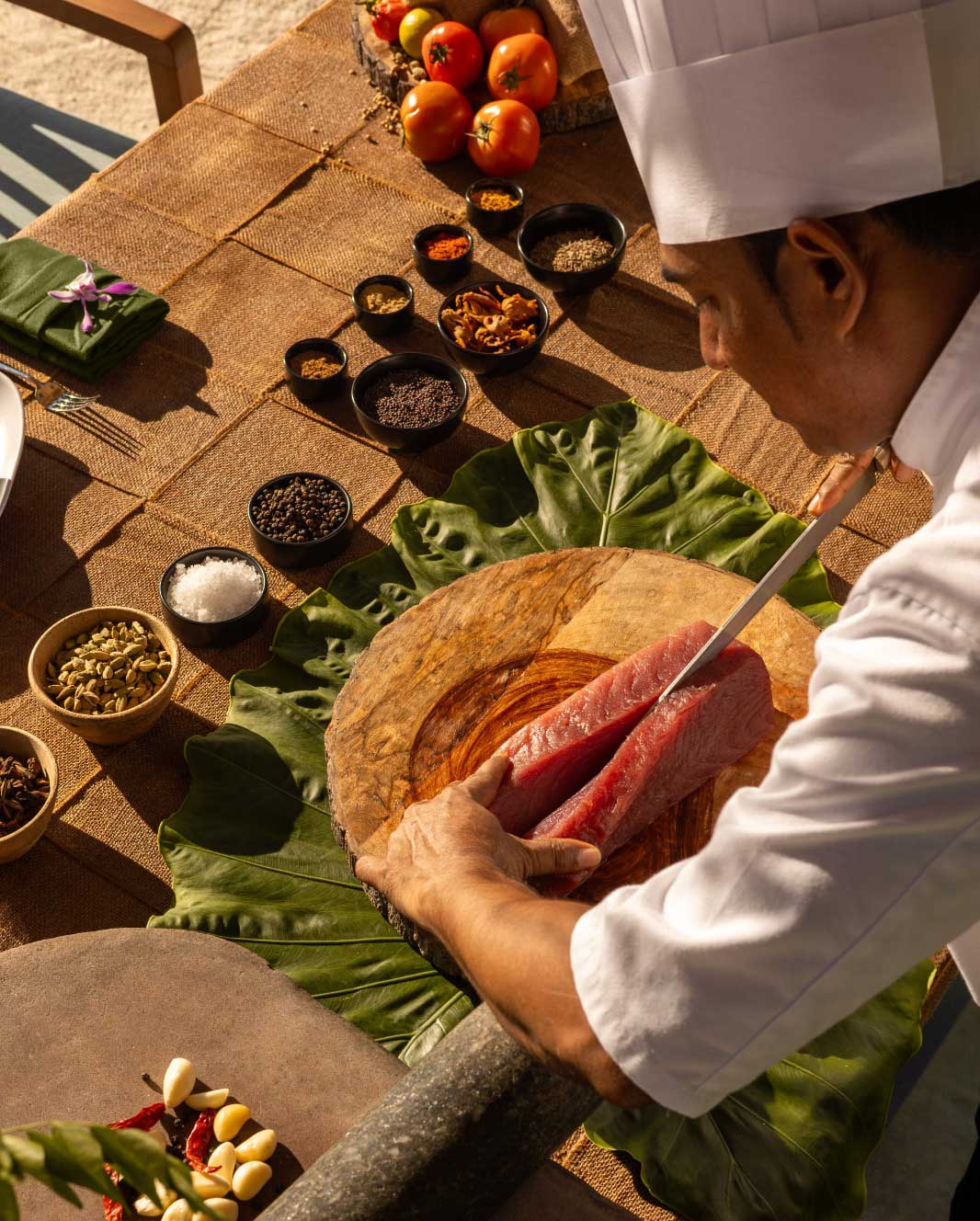
Traditional Maldivian cuisine is closely connected to the sea and the resources available on the islands. Fish, particularly tuna, and coconut are two of the most important ingredients, while chilli, onion, lime, rice, breadfruit and other locally available foods add flavour and variety. Centuries of cultural exchange with South Asia, Sri Lanka, Arabia and the wider Indian Ocean have shaped Maldivian cuisine, creating distinctive flavours with shared regional influences.
Maldivians also have a strong tradition of hedhikaa, often translated as “short eats.” These savoury and sweet snacks are particularly associated with afternoon or evening tea and are commonly served in homes, cafés and tea shops. Maldivian cuisine varies across islands and regions, with differences in ingredients, preparation and local dishes.
A traditional breakfast made from tuna, grated coconut, onion, chilli and lime. It is commonly eaten with roshi, a flatbread similar to a thin South Asian-style bread.
A clear fish broth traditionally prepared with tuna and served with rice, lime, chilli and various accompaniments.
Small fried pastries filled with a tuna mixture — one of the best-known hedhikaa, or short eats.
A small samosa-like pastry, another staple of the afternoon and evening tea table.
A tuna and coconut-filled flatbread, popular among the savoury short eats.
A baked cake that can be savoury or sweet depending on the recipe.
Tuna cooked with rice and spices — one of many regional favourites.
A concentrated fish paste, a cornerstone of the Maldivian pantry.
Fried moringa leaves, served alongside curries and rice dishes.